Table of Content
The first is MU-MIMO technology, which can improve performance if you've got many devices with data-intensive streaming needs connected at once. Second, its overall maximum throughput of 2,200Mbps is higher than the 1,700Mbps of extenders like the RE450. As an added bonus, the Nighthawk X4 won't block the second power plug on a typical wall outlet, and its antennas are internal for a cleaner aesthetic. There’s nothing worse than sitting down to watch TV and having the video signal freeze, flash on and off, or disappear entirely.
That makes it a good fit for covering a family room or busy home office, with a bunch of devices all connected at once. It also has a single Ethernet port, which is great for connecting a computer or game console. Most range extenders will put out their own separate network -- usually the name of your original network with "_EXT" added to the end, or something like that. Having a separate network like that under the same roof as your main network could potentially cause a small amount of interference, but I haven't seen any noticeable slowdowns on my main network during any of these tests. Aside from my speed tests, I made sure to stream video on each extender's network, and I made several video calls while connected through each one.
List of Ten Best Wireless Extender For Home [Experts Recommended 2023 Reviews]
The RE315 also handily beat the RE605X, our former upgrade pick, in this round of testing. This model is mesh-networking capable and features MU-MIMO technology. It offers coverage up to 2,300 square feet and connects up to 45 devices.

A simple setup with smart roaming and load balancing makes this an excellent networking companion. Cross-band technology allows you to combine bands and use them according to your preferences. With access filters to restrict devices, QoS to prioritize your traffic based on activity, you get control over the internet consumption and any unauthorized access.
Do you need a WiFi extender?
This is the best range extender for people with Wi-Fi 6 devices, offering all the benefits of the RE450 above plus Wi-Fi 6 technology. If you're certain you don't need Wi-Fi 6, you can save a bit of cash by opting for the RE450. Jargon aside, what this means is that Wi-Fi 6 is both faster and more efficient than Wi-Fi 5, which means it allows more devices to connect at once without experiencing slowdown. Devices also use less power when connected to Wi-Fi 6, which can translate to longer battery life.
With WPA2-PSK, you can also set up a WiFi password to secure your internet and avoid uninvited connections. The WiFi systems come with one ethernet cable, one quick start guide, and three power adapters. With this WiFi system, you can roam your entire house without losing the connection even once. My top pick, the TP-Link RE605X, makes it easy to tweak settings via TP-Link's Tether app on an Android or iOS device.
Are the data speeds of the extender the same as data speeds of your router?
However, there are plenty of devices out there that can help boost the range of your home's router, and we've rounded up some of the best Wi-Fi extender options on the market right now below. If the Nyrius Aries Home+ isn’t available and you need to pass only stereo audio , the J-Tech WEX200V3 is a great alternative. This wireless HDMI system performed almost as reliably as our top pick in our tests, and we didn’t see a lot of signal freezes or dropouts. At times we could see a bit of signal degradation in higher-quality Blu-ray video, which is a common problem with many multiroom wireless HDMI systems. J-Tech devices are aimed at the professional and custom-installation markets, and the WEX200V3 definitely has a “pro” look, with metal boxes, big antennas, and proprietary, lockable power cables.
(Despite their name, signal boosters can’t extend the signal too far beyond where the router’s original signal gives out.) We then placed the six laptops throughout the home, on all three floors and in the garage. The Asus RP-AX56 topped our performance tests while serving a reliable network signal to a troublesome corner of our test home. It was almost as good as the dedicated mesh network we tested in the same location.
Product durability
With a Wi-Fi range extender, you can boost a weak Wi-Fi signal, and even bring high-speed wireless connectivity to parts of your house that previously had no coverage. Plug-in range extenders like these can help boost your speeds when you're connecting far from the router, but they can only do so much. The actual speed boost will depend on a multitude of different factors, including the layout of your home, the type of router you're using, the type of device you're trying to connect with and your internet plan's speeds.

It isn't powerful enough to max out speeds on a gigabit network, but it can still hit consistent close-range speeds near 700Mbps or so, which is more than enough for most households. That’s sufficient for a single 4K streaming box, but it may be less than your internet connection can produce overall. If you plan to hook up more than one PC or multiple devices to the extender , you may be better off with an extender that has a Gigabit Ethernet port, like the Asus RP-AX56 below. These extenders use an electrical circuit within the walls of your home to transmit and receive a signal. TP-Link’s powerline extenders use 2x2 MIMO antennas (multiple-input, multiple-output) to receive multiple signals and combine those data streams into a single high-speed stream. The receiver unit cannot be further than 300 meters away from the base unit, which is connected directly to the router via ethernet cable.
So be sure to read the fine print and check the system requirements when picking a Wi-Fi extender for your particular needs. It uses a central router that connects to the modem and one or more satellite routers that all act as access points for the Wi-Fi signal. This way, you can place the different nodes around your home and extend your coverage far beyond the range you’d get if you only had a single router.
Before buying an extender, it is imperative that you know your needs, the area you need to cover, and your internet speed. You should also choose a good, reliable company to make the purchase from. Get the flexibility of using it with other ASUS routers and forming an AiMesh for seamless connectivity. Give yourself the choice of single or multiple SSID as per your preference and requirement.
The same goes for the latest Wi-Fi 6 and Wi-Fi 6E technologies, the current fastest flavors of Wi-Fi. If you recently bought a new router that supports these standards, you'll certainly want to make sure any range extenders support them as well. If you're living in a larger home or if you need speeds that are reliably faster than 100Mbps at range, then it's probably worth it to go ahead and upgrade to a mesh router with its own range-extending satellite devices.

It generates up to four separate Wi-Fi streams—giving your connected devices access to greater capacity when relying on the Wi-Fi network at the same time. Although it may not match the range and max speed of other range extenders, Netgear’s EX2700 is a great solution for extending a router’s signal on the cheap. This extender adds 800 square feet to a router’s signal, with internet speeds up to 20 Mbps. LED indicators on the front make it easy to see if the extender is connected to the router and devices.
TP-Link’s RE315 isn’t the fastest Wi-Fi extender on paper, but in our tests it improved performance and connection quality to our network in comparison with the Archer A7 router alone. It also offers a compact size, plugs directly into a power outlet, and has a 100 Mbps wired Ethernet port for connecting nearby devices. This dual-band WiFi extender from TP-Link is compatible with all WiFi-enabled devices, routers, and access points—including WiFi 6 devices.
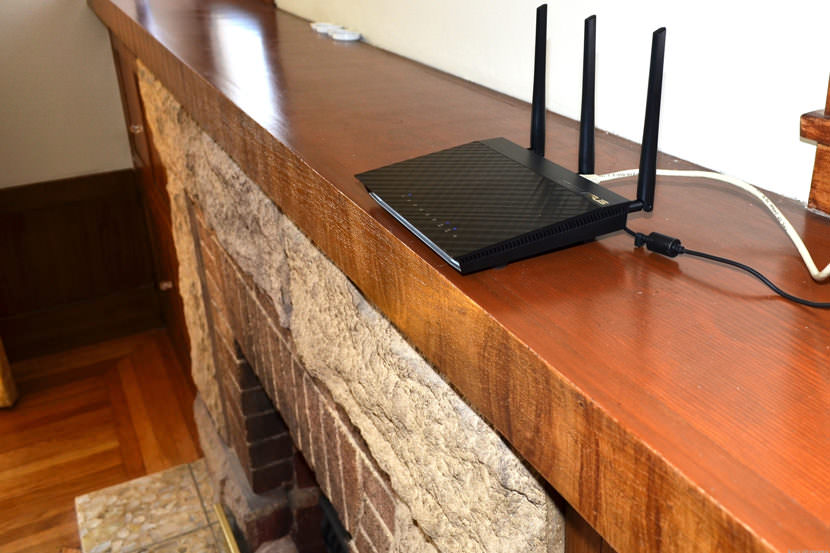
It’s as affordable and as easy to set up as the RE650 extender while being backwards compatible with older Wi-Fi 5 routers. NETGEAR Nighthawk Whole Home Mesh WiFi 6 System gives WiFi coverage of 3000 square feet. The Nighthawk WiFi system comes with a router and a high-powered satellite to provide strong WiFi removing all the dead zones.


No comments:
Post a Comment